
How to Rank Online Despite AI Snippets 2026
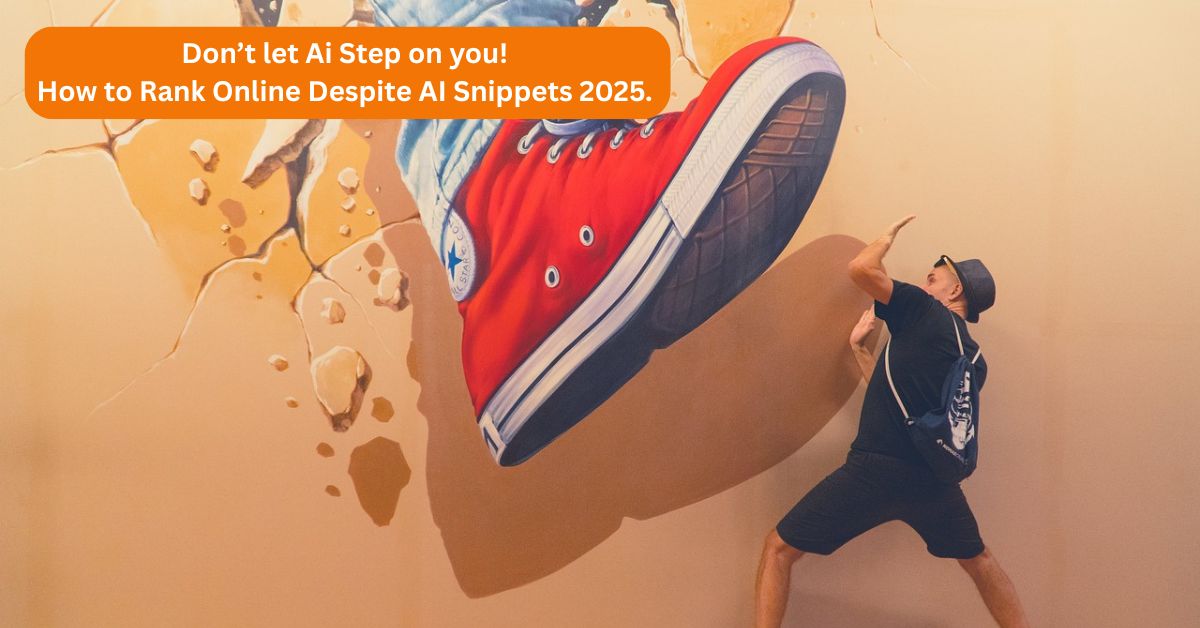
SEO in 2026 has evolved into a complex field. It’s no longer just about keywords or backlinks; it’s about visibility, trust, and performance across various devices, platforms, and even AI interfaces.
If you’re feeling like your rankings are stagnant or your traffic isn’t converting, you’re definitely not alone.
Here’s a look at the challenges many businesses are currently facing and how you can get back on the right path.
Table of Contents
1.Understanding Google’s AI-Powered Search
Google’s AI-driven Search Generative Experience (SGE) has transformed how search results are presented. AI-generated summaries often provide answers to user queries without the need for a click, pushing traditional organic listings further down the page.
While you can’t manipulate AI snippets, you can optimize your content for them
- Utilize clear subheadings and directly answer specific questions.
- Implement FAQ schema.
- Share first-party data or unique insights that AI is more likely to reference.
Over 58% of Google searches now conclude without a click due to AI summaries and rich results. (Semrush, 2024)
2.Keywords vs. Search Intent
Just because you rank for a term doesn’t mean you’re actually addressing the searcher’s intent. Many pages still focus on keywords rather than solving real problems.
To avoid this, you can align your content with user intent. Make sure that your content is:
- Informational: How-tos, guides
- Transactional: Product pages, comparison tables
- Navigational: Brand or location-specific content
Just shift your focus from volume to relevance.
3. Indexed or Invisible?
A page might be live and crawlable, but it may never make it into Google’s index. Why? If it’s thin or duplicated content. To avoid this make sure that your content is original or indicate if it is syndicated.
You can fix this by:
- Use the URL Inspection Tool in Search Console.
- Link to isolated pages internally.
- Steer clear of auto-generated or boilerplate content.
Interestingly, Google deindexes up to 40% of new URLs within 48 hours if it detects poor quality or redundancy. (Ahrefs, 2024)
4.Core Web Vitals: Still a Problem
Even with caching and plugins, a lot of websites still struggle to meet Google's performance standards especially on mobile devices.
To avoid this, these are some of the most recommended tips even if it means getting a professional or learning by yourself on YouTube.
- Compress and lazy-load images (tools like Imagify or LiteSpeed can help).
- Cut down on CSS and JavaScript.
- Whenever possible, host fonts locally.
According to (Google CrUX Report, 2024) only 17% of websites currently meet all three Core Web Vitals.
5. Canonical Tag Conflicts
Having duplicate or incorrect canonical tags can lead Google to index the wrong pages or sometimes none at all. Each page should have just one canonical tag, ideally pointing to itself.
Use an SEO plugin like Yoast or Rank Math to handle this automatically and lastly avoid the common mistake of setting all canonicals to the homepage.
6. Local SEO
It isn’t Just About Location Anymore. Local businesses often find it tough to show up in Google’s Map Pack even if they have great content.
To start showing on Google Maps, fully optimize your Google Business Profile for SEO: include hours, services, photos, and FAQs. Gather local reviews that incorporate relevant keywords in the comments.
Embed local schema on your service pages. Numbers never lie right? Google Consumer Insights, 2024 reports that 78% of mobile local searches result in an offline purchase within 24 hours. That’s how much Optimizing your Local SEO can get you.
7. Content That Doesn’t Rank—or Convert
Many sites boast visually appealing content that ends up buried on page 3, failing to attract real traffic.
Making sure titles, meta descriptions, and the content body are all aligned around a clear topic will get your website on page one.
Additionally, follow E-E-A-T principles which is experience, expertise, authority, and trust. Make sure your content is optimized for Search Everywhere Optimized it's really the new SEO.
Finally, regularly refresh existing content with updated facts and visuals. More of recycling your content relevantly.
8. Too Much AI, Not Enough Value
Everyone seems to be jumping on the AI bandwagon to churn out content. But when there’s a lack of original thoughts or genuine human touch, the result often feels a bit… hollow.
The goal is to Leverage AI as a helpful tool not to let it take over the creative process. Incorporate original research, share personal stories, or include real-life case studies.
Always double-check your facts before hitting publish. Google’s Helpful Content Update made waves 63% of sites that got penalized had low-quality or AI-generated content. Ai is here to be a helping tool not to replace genuine and human content.
9.Choosing the Right Platform
Is your content management system (CMS) boosting your SEO efforts or dragging them down? It’s a question that doesn’t get asked nearly enough.
Ensuring your platform allows you to manage metadata, schema, and loading speed effectively is important.
WordPress is great for flexibility, Shopify shines for smaller product catalogs, and headless CMSs are perfect for high-performance needs.
Needless to say, websites with over 15 WordPress plugins are 37% more likely to face performance-related SEO challenges. (WP Engine, 2024)
10.Measuring What Actually Matters
Just because you’re getting clicks doesn’t mean you’re seeing conversions.
And with AI summarizing everything, even visibility doesn’t guarantee a return on investment.
You have to look beyond just traffic: utilize event-based metrics in GA4 (like form submissions, button clicks, and phone calls).
Build a straightforward dashboard that connect your SEO efforts to your business goals. Checkout some of the best SEO measuring tools and how to measure your SEO efforts.
Final Round up
The SEO landscape is intricate, especially in 2025. The good news is that it’s definitely manageable.
The trick isn’t to chase after algorithms or stress over every little update.
It’s all about understanding what your users truly need, organizing your site effectively, and consistently providing real value.
SEO has evolved and your content needs to also. It's no longer about clever tricks; it’s about building trust, ensuring technical accuracy, and telling compelling stories.
We have a reputation of getting companies on page one of google. We optimize off page and on page SEO for all kinds of websites. Check them out here.
In case you need SEO services we've got your back.
Estimate costs with our marketing calculator. I hope this was helpful like this to help others like you also get help. Stay informed and good luck as you implement these tips.