
How to Leverage Social Media and a Website to Grow your Business
Forbes predicts a significant growth in global websites by 2030, with around 1.09 billion as of 2024. This growth highlights the importance of online presence for businesses and individuals.
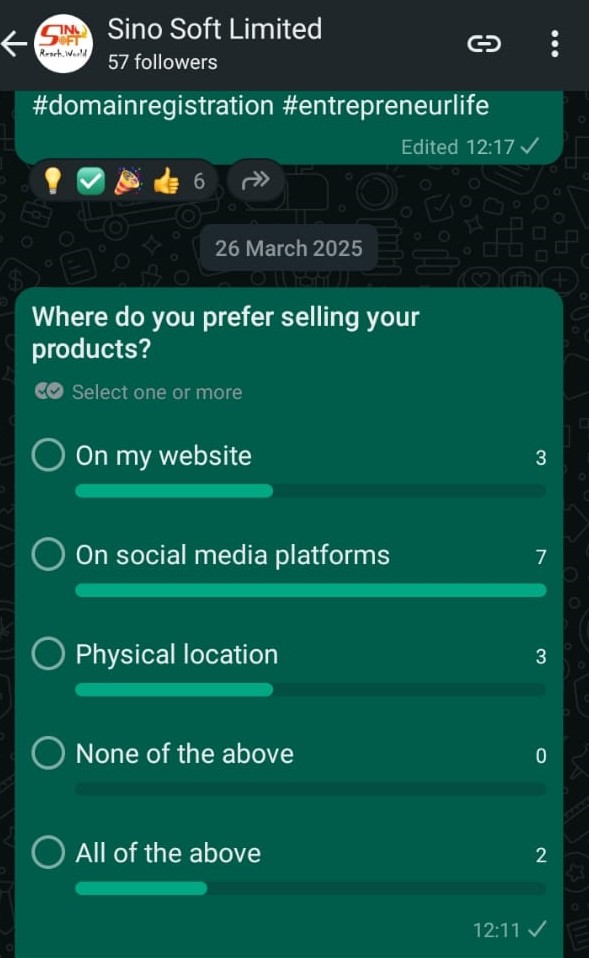
Our recent WhatsApp poll on our WhatsApp channel revealed that social media platforms are particularly beneficial for starting businesses. When a business is young and has limited resources, social media can be used to bring awareness.
However, as your business grows, you should leverage the power of social media with a website.
Many of our clients have transitioned from selling on social media to having ecommerce websites to list their services locally and internationally.
Contents
1. The Benefits of Having a Website.
- You Have Complete Contro With Your Website
- Build Trust & Authority.
- Custom Branding
- You have a sense of ownership
- You have an Expanded Reach Beyond Social Media
- It enhances SEO Rank on Google & Drives Traffic
- Sell Without Restrictions with E-Commerce Integration
- You Have Access to Analytics for Data-Driven Growth
- Long-Form Content with more depth and more value
- Building Stronger Relationships with direct customer engagement
2. How to Leverage Both Website & Social Media for Maximum Growth
- Use Social Media to Drive Traffic to Your Website
- Optimize Your Website for Social Sharing
- Dominate Google & Social Search with SEO and Hashtags
- Retarget Website Visitors Using Social Media Ads
- Build an Email List Using Social and Website Leads
3. The Best Marketing Strategy for Growth Funnel
7. Conclusion
The Benefits of Having a website

1. You Have Complete Control
Unlike social media, where algorithms dictate what users see, a website allows full control over:
- Content strategy (what, when, and how you post).
- User experience (layout, navigation, speed, and features).
- Monetization options (ads, sales, affiliates, etc.).
To put this into perspective, consider Facebook’s algorithm changes in 2018 drastically reduced organic reach for business pages.
Brands that relied only on Facebook saw traffic plummet, while those with websites continued to thrive.
2. Build Trust & Authority
A survey by Stanford found that 46% of people base their trust in a business on its website design alone.
A website signals legitimacy and professionalism-vital for customer trust.
- 75% of consumers judge a company’s credibility based on its website.
- Businesses without websites often appear less established or temporary.
- A well-designed site reassures visitors that your business is authentic and reliable.
3. Custom Branding
If you compare an Instagram's bio vs. a custom "About Us" page-which tells a richer, more persuasive brand story? The website wins every time.
While social media offers some branding options (logos, cover photos), a website provides unlimited creative freedom:
- Unique layouts, colors, fonts, and messaging.
- Personalized customer journey (e.g., interactive elements, video headers).
- Branded storytelling through blogs, testimonials, and custom pages.
4. You have a sense of Ownership
Consider what happened in 2021, Facebook, Instagram, and WhatsApp went down for hours, costing businesses millions.
Those with websites still operated normally.
With social media, you don’t own your audience or content. If a platform bans your account or goes down, you lose everything.
- A website is permanent and independent of social platform changes.
- You can export and back up all data (unlike social media).
- No risk of sudden policy shifts affecting visibility or monetization.
5. You Have an Expanded Reach Beyond Social Media

If we use a travel blog with SEO-optimized content as an example, it can attract thousands of organic visitors per month-without spending on ads! Websites attract global audiences through search engines, directories, and backlinks.
Social media, which thrives on followers, a website’s reach isn’t limited by an algorithm.
Check this out:
- Google processes 5 billion searches per day—potential customers are searching for your services!
- Websites can attract visitors from blogs, forums, guest posts, and collaborations.
- You’re not restricted to social media users alone.
6. It Enhances SEO Ranks on Google & Drives Traffic
Search Engine Optimization (SEO) boosts discoverability, helping customers find you without paid ads.
Websites can rank for industry keywords, attracting high-intent users. Blog content drives long-term organic traffic (unlike social media posts, which disappear fast).
Structured data (FAQs, rich snippets) help websites appear in Google featured results.
Comparison: Social Media vs. SEO Traffic
|
Platform |
Traffic Longevity |
Organic Reach |
Purchase Intent |
Cost |
|
Social Media |
Short-lived |
High, but algorithm-dependent |
Lower (casual browsing) |
High (requires ads) |
|
Website (SEO) |
Long-term (years) |
High (Google search) |
High (users actively searching) |
Low (free organic traffic) |
PS. Social media posts lose visibility within hours, SEO brings traffic for years.
7. You can Sell Without Restrictions with an E-Commerce Integration
While platforms like Facebook & Instagram Shops exist, they limit customization and charge high fees. A website offers:
Full control over the checkout process (no forced redirections).
Lower transaction fees than social media shops.
Custom upselling and cross-selling options.
Integration with email marketing, abandoned cart recovery, and analytics.
8. You have Access to Analytics for Data-Driven Growth

When you look at social media, data is limited (e.g., Instagram only shows reach, not user intent). A website provides:
- Detailed visitor tracking (who they are, where they came from, what they clicked).
- Heatmaps & session recordings to see user behavior.
- Conversion tracking to measure ROI accurately.
Google Analytics helps businesses see which traffic source converts best, allowing for smarter ad spending.
You also have the flexibility to check and analyze SEO with SEO tools that help you measure how your website content is performing.
9. Long-Form Content with more depth and more value
Social media thrives on short, catchy posts. But deep, informative content builds trust and authority. In a website, a single high-ranking blog post can drive thousands of monthly visitors-something social media can’t sustain long-term.
A website allows:
- Blog posts that answer complex customer questions.
- Case studies that demonstrate success stories.
- Resource hubs (e-books, guides, whitepapers) for lead generation.
10. Building Stronger Relationships with direct customer engagement

A website provides multiple ways to connect with customers without distractions (unlike social media, where competitors appear in feeds).
Businesses using live chat on their websites see 82% higher conversion rates than those without it.
With a website, you have:
- Contact Forms- Helps to capture leads and inquiries directly.
- Live Chat Support - You have the chance to immediately offer customer assistance = higher conversions.
- Email Sign-ups - Build an audience that you own (unlike social media followers that can just opt out without you knowing).
Which is Better? Social Media vs. Website
|
Feature |
Website |
Social Media |
|
Ownership & Control |
Yes |
No (Platform-dependent) |
|
SEO & Google Ranking |
Yes |
No |
|
E-Commerce & Sales |
Full control |
Limited |
|
Lead Generation |
Email, forms, chat |
Mostly DMs |
|
Content Longevity |
Years (evergreen) |
Hours/days |
|
Customization & Branding |
Fully customizable |
Limited |
|
Paid Ad Dependency |
Lower need |
High need |
|
Trust & Credibility |
High |
Medium |
How to Leverage Both Website & Social Media for Maximum Growth
To effectively dominate the digital space, businesses should integrate their website and social media strategically. Instead of choosing one over the other, here’s how to combine their strengths for maximum impact.
1. Use Social Media to Drive Traffic to Your Website
Social media is excellent for engagement, but your website is where conversions happen. A business that has optimized its social media links and calls-to-action sees a 40% increase in website traffic.
Here's how to bridge the gap:
- Link your website everywhere, including bios, posts, and stories.
- Share snippets of blog posts, products, or case studies with a "Read More" call-to-action directing users to your website.
- Run social media ads with links to high-converting landing pages.
- Use contests and giveaways that require users to visit your website to participate.
2. Optimize Your Website for Social Sharing
Being that a blog post with social sharing options gets 94% more views than one without, encourage visitors to share your content.
This will tremendously drive organic traffic from social media to your website.
- Add social share buttons to articles, products, and offers.
- Create engaging headlines that perform well on both websites and social media.
- Embed social media content within blog posts, such as tweets and Instagram posts.
- Feature user-generated content, such as testimonials and reviews from social media, on your website.
3. Dominate Google & Social Search with SEO and Hashtags
Websites rank on Google, while social media thrives on hashtags and trending topics. Use both for maximum reach.
- Optimize website content with relevant keywords, fast-loading pages, and strong meta descriptions.
- Use trending hashtags in your industry to boost social media visibility.
- Repurpose website blogs into short-form content for platforms like Instagram, TikTok, and LinkedIn.
Google Search vs. Social Media Search
|
Search Method |
Long-Term Traffic |
Instant Visibility |
Purchase Intent |
Best for... |
|
Google (SEO) |
High (sustainable) |
Takes time |
Strong |
Blogs, landing pages |
|
Social Media (Hashtags) |
Short-lived |
Immediate |
Weaker |
Viral content, brand awareness |
4. Retarget Website Visitors Using Social Media Ads
Most website visitors don’t convert on the first visit, but you can bring them back with retargeting.
How can you do this? Well, here are some tips:
- Use Facebook Pixel and Google Analytics to track visitors.
- Run retargeting ads for users who visited your site but didn’t complete a purchase.
- Offer incentives such as discounts or free trials to encourage return visits.
- Test different ad creatives to find the most effective approach.
5. Build an Email List Using Social and Website Leads
Email is one of the highest-converting marketing channels, with an average return on investment of $42 per $1 spent.
- Use pop-ups and lead magnets like free guides, webinars, and discount codes to collect emails on your website.
- Offer exclusive content on social media in exchange for email sign-ups.
- Create a private Facebook group or online community to gather emails for future marketing efforts.
The Best Marketing Strategy Growth Funnel

Here’s how you can integrate all platforms into a seamless marketing system:
- Create Awareness (Social Media) – Share valuable content, build engagement, and reach new audiences.
- Drive Traffic (Website) – Use compelling calls-to-action to direct social media users to your website.
- Capture Leads (Email List) – Offer valuable resources in exchange for email sign-ups.
- Convert & Retarget (Paid Ads) – Use retargeting campaigns to bring back visitors and increase conversions.
- Retain & Upsell (Loyalty Campaigns) – Keep customers engaged through email marketing, community-building, and exclusive deals.
Why Do I Need a Website If I have Social Media?
|
Reason |
Website |
Social Media |
|
Ownership & Control |
Full control over content, design, and branding. |
Platform policies and algorithms dictate visibility. |
|
SEO Benefits |
Search engines drive long-term organic traffic. |
Limited SEO benefits beyond profile optimization. |
|
Credibility |
A professional website builds trust and authority. |
Can appear less formal and less reliable. |
|
Information Depth |
Unlimited space for blogs, products, and services. |
Limited to posts, captions, and bio sections. |
|
E-commerce |
Full control over sales, checkout, and data. |
Often higher transaction fees and limited features. |
|
Analytics & Data |
In-depth insights into user behavior and traffic. |
Platform-dependent, often restricted data access. |
Which Drives More Business Website or Social Media?
Numbers never lie. On a survey of 500 businesses, it was found out that:
- 65% reported higher conversions from their website.
- 20% said social media generated more leads but lower conversion rates.
- 15% relied solely on social media and struggled with organic reach.
Website vs Social Media Conversion Rate
Websites generally convert more visitors into customers, while social media is better for initial engagement and lead generation.
Here’s how website and social media compare in terms of lead conversions:
Conversion Rate (%) by Platform
|
Platform |
Average Conversion Rate (%) |
|
Website (SEO-driven) |
4.6% |
|
Website (Paid Ads) |
3.9% |
|
Social Media Ads |
1.5% |
|
Social Media Organic |
0.7% |
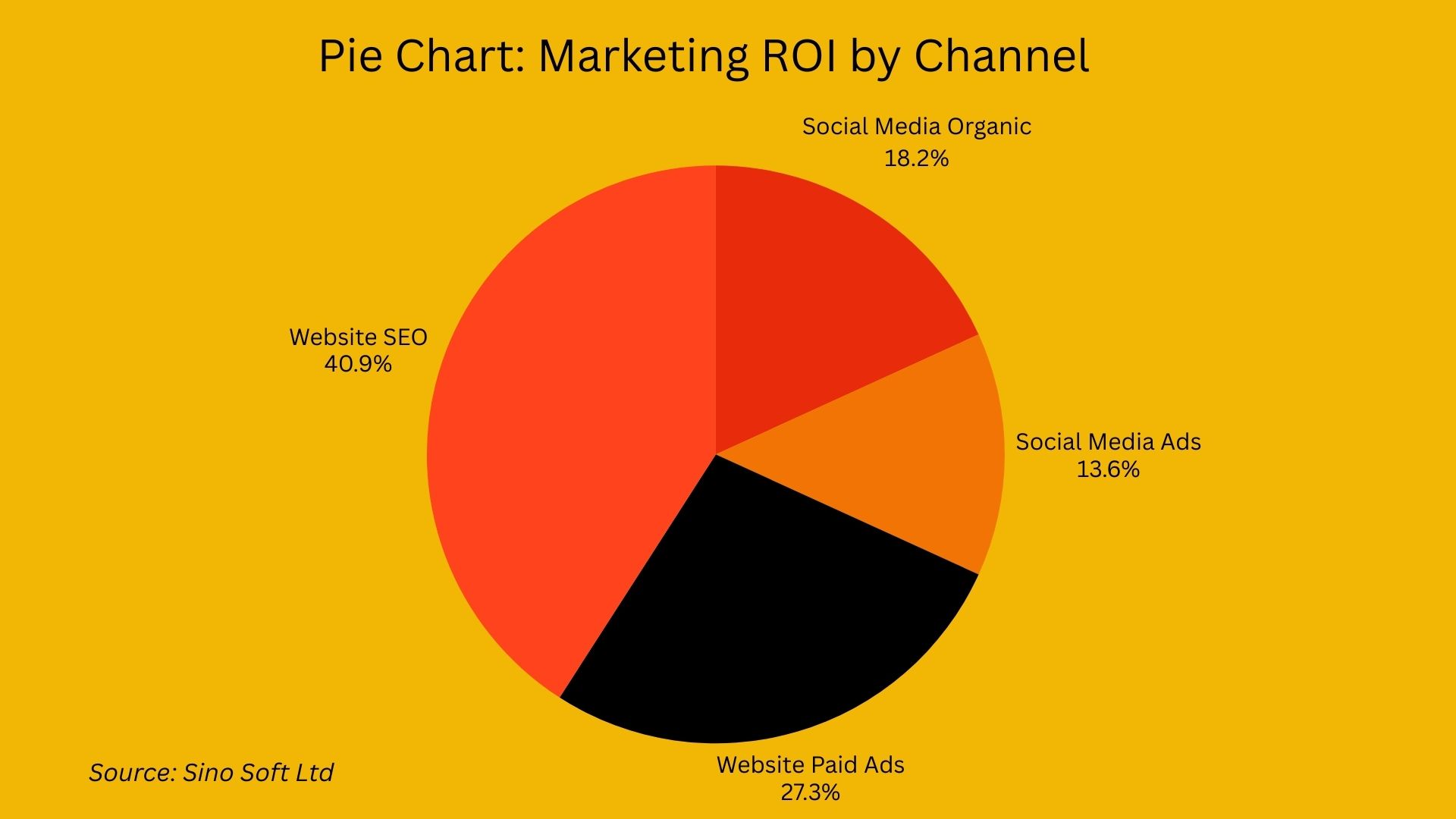
Pie Chart: Marketing ROI by Channel
Frequently Asked Questions about Website vs Social Media
Can't I just use social media for my business?
While social media is a powerful tool for engagement and reach, relying solely on it limits your control and exposes you to platform-specific changes. A website complements your social media efforts by providing a stable, controlled environment for your brand.
How does a website improve my marketing strategy?
A website enhances your marketing strategy by offering a centralized platform for content, improving SEO, providing detailed analytics, and allowing for direct customer interactions without intermediary platforms.
Is maintaining a website costly and time-consuming?
The investment in a website varies, but numerous tools and platforms make website creation and maintenance accessible and affordable. The long-term benefits, including increased credibility and control, often outweigh the initial setup and ongoing maintenance efforts.
CONCLUSION

With over 1.09 billion websites and thousands more created daily, many businesses debate whether to rely on social media or invest in a website. The truth is, you need both.
Social media is great for engagement, brand awareness, and quick sales. But as your business grows, a website becomes essential for credibility, ownership, and long-term SEO-driven traffic.
Businesses that use both-driving traffic from social media to their website-see higher sales and stronger brand authority.
Having a website is an investment rather than a cost.
Are you ready for growth?
Learn how we can help your business reach international markets with affordable digital marketing plans. Be found online and grow your business to accomodate the future!
You can also check how much is the cost of creating a website for your business here in Kenya or even internationally.
Some of businesses we have partnered are doing extremely well check our projects. Found this article helpful? Give us a thumbs up!