Search Engine Optimization (SEO)- A Comprehensive Guide

Search Engine Optimization (SEO)- A Comprehensive Guide
SEO is a famous term that is used by the online community. But what really is SEO? It doesn't matter who you are or what business you are into. If you are planning to get into doing business online, you cannot avoid this term. To make sure that happens, we've prepared a comprehensive guide to act as a road map to SEO for you. Let's dive right in!
What is SEO?
SEO is an acronym for Search Engine Optimization. It is an essential online marketing strategy dedicated to driving prospective customers to your website. Its goal is to optimize a website to gain top positions for selected keywords on search engines. This goal is achieved by strategically employing measures to improve the website's technical setup and contents and obtaining backlinks from other domains.
SEO is divided into three general categories:
- Keywords and rankings
- On-page SEO
- Off-page SEO
SEO specialists apply measures to meet the search engine's ranking factors for each category. Search engines use ranking factors to determine the position in which it lists a website in search results.
Why Do I need SEO?
Every day, millions of people use search engines to find information or services from all aspects of life: Recipes, guides, products, flights, navigation, tickets, entertainment, and more. Most people navigate the web using search engines to find answers to their questions and solutions to their challenges.
A study shows that 68% of the web's traffic comes from search engines. 53% of this traffic has its origins in organic search—search results that are not ads (paid search) and can be improved through SEO.
In other words, organic search (SEO) and paid search (SEA, ads in search results) make up the lion's share of traffic on the web.
Even where we go offline is significantly influenced by search engines: We use Google and Apple Maps and local search results to find places and nearby services like hairdressers, supermarkets, restaurants, and doctors. We choose our destination based on online reviews. And we instruct search engine-based services to guide us there, be it by car, public transportation, or on foot.
Now, imagine if your business, products, and services are not listed in search results. Imagine people can't find you online to buy your products or find their way to your brick-and-mortar business. Instead, they will most likely choose your competition.
What can I use SEO for?
With the help of SEO, users can find your business, products, and services online—and buy them. As mentioned, that means that people can find you online and much easier offline, too.
SEO maximizes your chances to be listed in top positions for keywords crucial to your business. The better your position, the more people will find their way to your website—preferably on the first page (or top ten) of search results.
Why Page One?
Good question. Studies have shown that 31.7% of users click on the first organic search result (position one); a whopping 75.1% of all clicks go to the top three search results. After that, the number of clicks shrinks rapidly with every following position.
This behavior shows that users rarely look at page two or lower results, let alone click on any of them.
That's why businesses need to be present on the first page of search results, at least for relevant keywords.
In short: It's crucial for freelancers and business owners to
- Own a website or any kind of online presence, even if they offer their products or services offline
- Perform SEO to make sure they rank on page one for relevant keywords
Why are keywords Important?
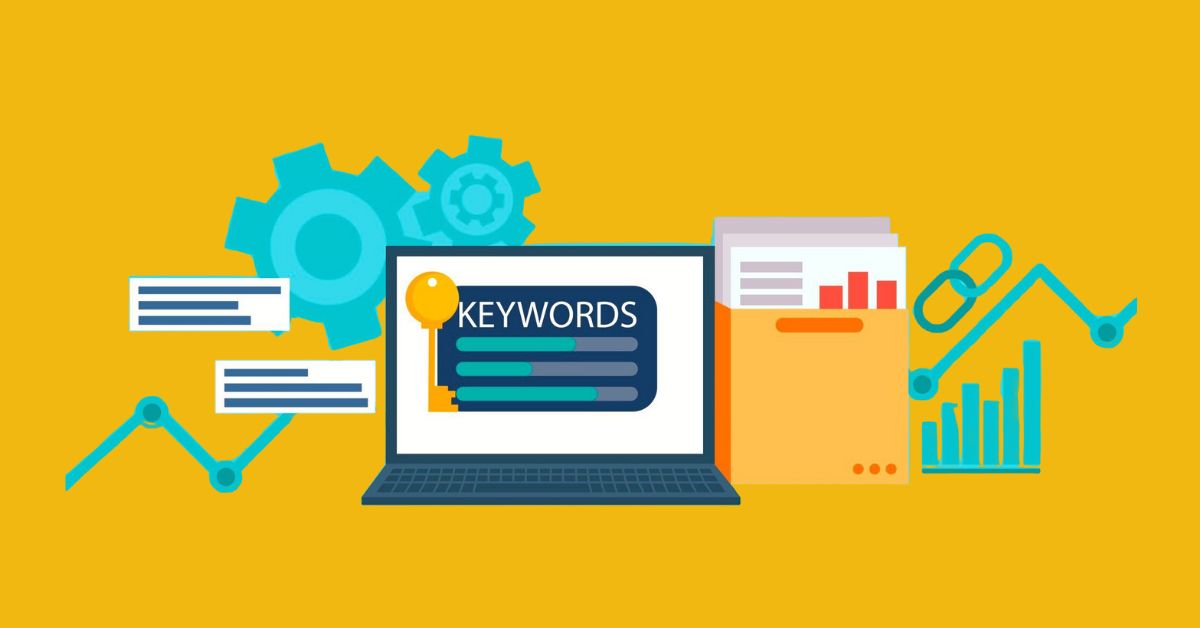
Keyword is a technical term for search queries (words, phrases, sentences, and questions). With their help, users find content that answers their questions and provides solutions. Put simply, a keyword is the link between users and your website. Search engines compare keywords with websites, looking for content with the highest relevance.
A big part of SEO lies in identifying keywords that have the potential to drive relevant traffic to your website—in other words, bringing in prospective customers. To do that, you need to identify search terms (or keywords) people use when searching for offers like yours. This process is called keyword research. Ideally, keyword research provides you with a list of keywords covering search queries across the entire customer journey.

What is Keyword Optimization?
So we know that relevance is a crucial factor for a top position in search results. To create relevant content, you want to deal with the topics and questions around a keyword on an individual subpage or URL. Then, make sure your keyword appears in crucial spots on your page.
Let's say you are in the ice cream business. One of your keywords is s'mores ice cream sandwich. Now you focus on everything that has to do with a s'mores ice cream sandwich.
What you want to do is create a recipe page for a s'mores ice cream sandwich where users find an easy-to-follow recipe, pictures or videos, and answers to questions they might have. S'mores ice cream sandwich is your focus keyword that should appear in your page's URL, title, headlines, and more.
Providing a dedicated and keyword-optimized page makes it easy for search engines—and users, too—to determine what your page is all about. That way, they can list it in good positions in related search results.
Keyword Research Tools
Keyword research is a Must-Have SEO Tool for your Website asit is the foundation of any successful SEO strategy.By identifying the right keywords, you can attract the right audience and increase your website's visibility. Here are three essential keyword research tools to help you get started:
1. Google Ads Keyword Planner
This free tool by Google allows you to find relevant keywords based on search volume and competition. It provides valuable insights into keyword trends and helps you discover new keyword ideas.
2. Semrush
Semrush is a comprehensive SEO tool that offers a wide range of features, including keyword research. It provides detailed keyword metrics, competition analysis, and even suggests long-tail keywords that can drive targeted traffic to your website.
3. Ahrefs
Ahrefs is another powerful SEO tool that offers a robust keyword research feature. It provides accurate keyword difficulty scores, search volume data, and also shows you the top-ranking pages for any keyword, helping you understand what it takes to outrank your competitors.
With these tools, you can uncover valuable keywords that will drive organic traffic to your website and improve your search engine rankings.
On-Page Optimization Tools
On-page optimization plays a crucial role and a must have SEO tool in improving your website's visibility to search engines. By optimizing your content and HTML source code, you can ensure that search engines understand your website's relevance to specific keywords. Here are three essential on-page optimization tools:
1 Yoast SEO
Yoast SEO is a popular WordPress plugin that helps you optimize your website's on-page elements. It provides real-time suggestions for improving your content's readability, keyword usage, meta tags, and more, making it easier to optimize your pages for search engines
2. XOVI Now
Xovi Now is another important tool that helps you be founf online by their powerful SEO tools.
It helps you to get comprehensive keyword data, Identify promising keywords for better traffic, Analyze your competition's keywords and rankings and Compare your website to International markets.
3. Screaming Frog
Screaming Frog is a website crawling tool that allows you to analyze your website's on-page elements in-depth.
It helps you identify any issues or errors that may be affecting your website's crawlability and provides recommendations for optimizing your title tags, meta descriptions, headers, and more.
4. Google Search Console
This is another free tool provided by Google that allows you to monitor and optimize your website's presence in Google search results.
It provides valuable insights into your website's performance, including keyword rankings, click-through rates, and crawl errors. By analyzing this data, you can make informed decisions to improve your website's visibility.
By using these tools, you can ensure that your website's on-page elements are optimized for search engines, increasing your chances of ranking higher in search results.
Link Building Tools
Link building is a crucial aspect of SEO that involves acquiring high-quality backlinks to your website. Backlinks are like votes of confidence from other websites, indicating to search engines that your website is trustworthy and authoritative. Here are three essential link building tools:
1. Moz Link Explorer
Moz Link Explorer is a powerful tool that allows you to analyze the backlink profile of any website. It provides valuable insights, such as the number of backlinks, the domain authority of linking websites, and the anchor text used.
By analyzing your competitors' backlinks, you can identify link building opportunities and devise a strategy to acquire high-quality backlinks for your own website.
2. BuzzStream
BuzzStream is a comprehensive outreach and link building tool that helps you manage your link building campaigns.
It allows you to find relevant websites, track your outreach efforts, and measure the success of your link building campaigns. With Buzz Stream, you can streamline your link building process and improve your chances of acquiring high-quality backlinks
3. Ahrefs
In addition to its keyword research capabilities, Ahrefs also offers a powerful link building toolset. It allows you to analyze your competitors' backlinks, find link building opportunities, and track the success of your link building campaigns. With Ahrefs, you can build a strong backlink profile that will boost your website's authority and improve your search engine rankings.
By utilizing these link building tools, you can develop a robust link building strategy that will help you improve your website's authority and visibility in search results.
Technical SEO Tools
Technical SEO refers to the optimization of your website's technical aspects to ensure that search engines can crawl and index your website effectively. Here are three essential technical SEO tools:
1.Google PageSpeed Insights
Page loading speed is a crucial factor for both user experience and search engine rankings. Google PageSpeed Insights analyzes your website's performance and provides recommendations for improving its loading speed. By implementing these recommendations, you can enhance user experience and boost your website's rankings.
2. Screaming Frog
In addition to its on-page optimization capabilities, Screaming Frog is also a powerful tool for technical SEO analysis. It allows you to identify technical issues such as broken links, duplicate content, and missing meta tags. By fixing these issues, you can improve your website's crawlability and ensure that search engines can index your website effectively
3.Google Search Console
As mentioned earlier, Google Search Console provides valuable insights into your website's performance. It also allows you to submit your XML sitemap, which helps search engines discover and index your website's pages. By regularly monitoring your website's performance in Google Search Console, you can identify and fix any technical issues that may be affecting your website's visibility.
By utilizing these technical SEO tools, you can ensure that your website is optimized for search engines, improving its crawlability and indexability.
Competitor Analysis Tools
Analyzing your competitors' strategies can provide valuable insights and help you stay ahead in the competitive SEO landscape. Here are three essential competitor analysis tools
1. Market goo
Market goo is a tool that helps you to see how your competitors rank for the keywords you're focusing on, and track their site's popularity. Powerful, Right? On top of that it also gives you a monthly report of how your website is perfoming for improvement and comparison purposes
2. Semrush
Semrush offers a powerful competitor analysis feature that allows you to analyze your competitors' organic and paid search strategies. It provides valuable insights into their top-ranking keywords, backlink profile, and advertising campaigns. By understanding your competitors' strategies, you can identify areas for improvement and devise a strategy to outrank them
3. Ahrefs
Ahrefs also offers a comprehensive competitor analysis feature. It allows you to analyze your competitors' backlink profile, top-ranking pages, and content strategy. By analyzing this data, you can identify link building opportunities, create better content, and optimize your website to outrank your competitors.4.
4. BuzzSumo
BuzzSumo is a powerful content analysis tool that allows you to analyze the performance of your competitors' content. It provides insights into the most shared content, the influencers who shared it, and the backlinks it acquired. By understanding what type of content performs well in your industry, you can create better content that resonates with your audience and attracts more backlinks.
By leveraging these competitor analysis tools, you can gain valuable insights into your competitors' strategies, identify areas for improvement, and develop a winning SEO strategy.
Analytics and Reporting Tools
Measuring the success of your SEO efforts is crucial for refining your strategy and optimizing your website further. Here are three essential analytics and reporting tools:
1. Google Analytics
Google Analytics is a powerful web analytics tool that provides detailed insights into your website's performance. It allows you to track key metrics, such as website traffic, user behaviour, and conversion rates. By analyzing this data, you can identify areas for improvement and make data-driven decisions to optimize your website.
2. Google Data Studio
Google Data Studio is a reporting tool that allows you to visualize and share your Google Analytics data. It provides customizable dashboards and reports, making it easier to track the performance of your SEO campaigns and communicate the results to stakeholders.
3. SEMrush
In addition to its keyword research and competitor analysis capabilities, Semrush also offers comprehensive analytics and reporting features. It allows you to track your keyword rankings, monitor your website's visibility, and generate detailed reports. With Semrush, you can measure the success of your SEO efforts and identify areas for improvement.
By utilizing these analytics and reporting tools, you can track the performance of your SEO campaigns, measure your website's success, and make data-driven decisions to optimize your website further.
SEO Plugins for Content Management Systems
If you're using a content management system (CMS) like WordPress, there are several SEO plugins available that can simplify your SEO efforts. Here are three essential SEO plugins:
1. Yoast SEO
As mentioned earlier, Yoast SEO is a popular WordPress plugin that helps you optimize your website's on-page elements. In addition to its on-page optimization features, it also offers XML sitemap generation, social media integration, and more. With Yoast SEO, you can easily optimize your content for search engines and improve your website's visibility.
2. All in One SEO Pack
All in One SEO Pack is another must have SEO tool popular WordPress plugin that offers a wide range of SEO features. It allows you to optimize your website's title tags, meta descriptions, XML sitemaps, and more. With All in One SEO Pack, you can ensure that your website is optimized for search engines, even if you're not an SEO expert.
3. Rank Math
Rank Math is a relatively new SEO plugin for WordPress that has gained popularity for its user-friendly interface and powerful features.
It offers advanced on-page optimization capabilities, schema markup integration, and even allows you to track keyword rankings. With Rank Math, you can streamline your SEO efforts and improve your website's visibility in search results.
By utilizing these SEO plugins, you can simplify your SEO efforts and optimize your website for search engines, even if you don't have extensive technical knowledge.
Local SEO Tools
If you have a local business, optimizing your website for local search is crucial for attracting customers in your area. Here are three essential local SEO tools:
1. Google Business Profile
Google My Business is a free tool provided by Google that allows you to manage your business information across Google search and maps. By claiming and optimizing your Google My Business listing, you can improve your visibility in local search results and attract more customers.
3. Moz Local
Moz Local is a powerful tool that helps you manage your business listings across various online directories. It ensures that your business information is consistent and accurate across the web, which is crucial for local SEO. With Moz Local, you can easily manage your listings and improve your visibility in local search.
3. BrightLocal
BrightLocal is another comprehensive local SEO tool that offers a wide range of features, including local citation building, review management, and local rank tracking. It helps you improve your visibility in local search results and monitor your online reputation.
By utilizing these local SEO tools, you can optimize your website for local search and attract more customers in your area.
How do I use the XOVI Now Advisor?
First, check out the advisor's board by clicking Advisor in the top navigation bar. It is a Kanban board helping you organize your tasks by status. Your tasks are color coded by importance:
- Red: High. Solve ASAP.
- Yellow: Medium. Tackle those soon.
- Blue: Low. Keep them in mind and solve them when you can.
You can drag and drop as you complete tasks, assign tasks to other users (depending on your plan), and filter by the assignee.
As mentioned above, tasks are a mix of standard basic SEO measures and issues found in weekly automated audits of your website.
I want the advisor; how do I get it?
Keep in mind that you do need a Project for the Advisor feature to work. Also, most of the Advisor's tasks are tailored to a Project's website (usually yours or your client's). If you manage more than one website, you'll need to create an extra Project for each of them.
To add or switch to another project, click the Projects menu in the top navigation bar. Depending on your plan, you might need to upgrade it to add another Project.
How do I assign tasks to users?
To assign a task to other users, you'll need a plan that allows additional users. If your plan includes additional users, you'll find the Assignee menu in your Advisor and tasks. Simply choose a user to assign a task or filter the Advisor by. To add a new user, click on your profile avatar and then click Users. If your plan does not include additional users, you won't see the Assignee menu in your Advisor or tasks. Upgrade your plan to add users.
There are tasks I’ve already covered. Why do they pop up?
There are two reasons why you might see tasks you've already solved or covered. As mentioned above, tasks are a mix of basic SEO measures and issues found in weekly automated audits of your website.
First, the tasks covering basic SEO measures are the same for everyone and are not tailored to your website or business. For example, we don't know whether you created a Google account for your business and set up Search Console or if you installed SEO plugins. If you already did—great work! Simply flag those tasks as Done.
The second reason is that the Advisor is automatically updated based on the results of automated weekly Site Audits. In other words, if a Site Audit identifies any issues concerning a task you completed in the past, it will automatically be updated and pop up in the Open section.
What is project Visibility?
Maybe you already stopped to think, “Wait, but I don't care about my visibility for keywords that have nothing to do with my business.” And you are right. While Visibility is a great score to get an idea of your overall performance and compare websites in general, it's not tailored to your specific keyword set.
That's why we provide Project Visibility. This metric is calculated the same way as Visibility, but instead of using 500,000 cross-industry keywords, Project Visibility is exclusively based on keywords in your Rank Tracker.
In other words, Project Visibility is a custom visibility score for the unique set of keywords relevant to your business.
You'll find Project Visibility here: Projects → Rank Tracker → Visibility.
As you might already know, you can also track your competitors' rankings in your Rank Tracker. That way, you'll get Project Visibility for them, too, allowing for a much more realistic comparison. So, even if they have a slightly different product or service portfolio, Project Visibility accounts exclusively for keywords you actually share.
Why is visibility score useful?
Use your Visibility score as an indicator of your overall SEO performance, problems, and potential for optimization.
-
Get An Idea of Your Overall SEO Performance
You can track rankings for single keywords and know which position you rank on. It's an important thing to do. However, rank tracking does not give you a bird's eye view perspective of the overall improvement of your rankings—but Visibility does. When your SEO measures are effective and rankings improve, so does your Visibility score.
-
Diagnose SEO Problems
A sudden drop in your Visibility indicates problems in your SEO performance. Use Visibility like an alert. If it drops significantly, start digging for what happened. Here's a list of common reasons:
- You were hit with a Google Penalty. Check Search Console for notifications. Make sure to follow Google's Webmaster Guidelines.
- There are ramifications from a recent change in Google's algorithm. Inquire about recent Google Updates and what they entail.
- Your competitors optimized their websites and content, and now they out-compete you. Compare their (historical) Visibility with yours. Use the Wayback Machine to compare how their content changed.
- You relaunched your site without SEO in mind. For example, check robots.txt and .htaccess for accidentally blocked pages, increased 404 status codes, faulty 301-redirects, and internal links.
You changed your content in a way that didn't help your rankings. Consider reversing the changes.
Your website has technical issues. Run a Site Audit or check your Advisor for open technical tasks. Check your backend for outdated, recently updated, or incompatible plugins that may cause havoc.
Hosting issues are the cause. Inquire whether your host made recent changes, has been hacked, moved their servers, or experienced technical difficulties. See if your server has issues.
Keep in mind that this list is not exhaustive. One or more of those reasons can apply simultaneously, or there could be other reasons altogether.
-
Competitor Comparison
Visibility is a great metric for a quick comparison of two or more websites. Check your Visibility against theirs. Who is out-competing who? Has a competitor outperformed you in the past or vice versa? Who's leading the field, and how big is the gap between you and your fiercest competitor? Answering those questions will help you develop an SEO strategy to come out (and stay) at the top of your niche.
-
Track Visibility Development Over Time With Historical Data
Want to know how a website fared over time? We provide historical data going all the way back to 2009, free of seasonal fluctuations. That way, you can track and compare historic Visibility and see their development over long periods of time.
How Can I Improve Visibility Score?
Short answer: Don't make improving Visibility a goal in your SEO strategy.
Long answer: Visibility reflects the quality of your rankings in a single metric; it won't lead to better rankings. Make it your goal to improve your rankings for relevant keywords that prospective customers actually use to find products and services like yours. Improving your rankings will improve your Visibility, too. But it's your rankings that really matter.
As a rule of thumb, your Visibility score will be higher if
- Your domain's URLs rank in good positions
- You have a high number of indexed URLs with good rankings
- You rank well for keywords with a high search volume
I bet you are now comfortable about SEO and what it really means. SEO is a really big part for businesses that want to exist online. I t acts as a boost for your business. Incase you have any questions regarding SEO or how you can boost your business, feel free to reach out now and we will help where we can.