
Best Ways to Migrate a WordPress Website
Not all hosting service providers offer the same level or quality of service. Therefore, there arises a need to move your WordPress website from one provider to another. Here, we will introduce some WordPress migration tools you can use to simplify the process of migration from one hosting provider to another. You can transfer your domain to Sino Soft Limited to access reliably secure servers and enjoy 99.99% uptime.
Should I Migrate My WordPress Site Manually or Automatically?
Migrating a WordPress website isn’t hard. However, if you want to do so manually, you’ll need to be comfortable using File Transfer Protocol (FTP), accessing databases, and modifying files on your old site’s back end.
The processes sound complex, but they’re simple enough if you follow a clear tutorial. However, if you’d rather try a simpler approach, you can always use a WordPress migration tool or plugin.
Keep in mind that large websites can be more prone to errors when using migration plugins. In those cases, manual migration is the better approach. If you follow the instructions carefully, you shouldn’t encounter any problems.
Finally, it’s worth noting that some web hosts offer free migration services to new subscribers. You can also hire a third-party service to help you move your site, although that can be a expensive option (and you’d need to make sure you choose a company with a great reputation).
How to Migrate Your WordPress Site Manually
Even if you’re not afraid to roll up your sleeves and migrate your site by hand, you’ll probably want a little help getting started. Let’s walk through the process, one step at a time.
Step 1: Choose a New WordPress Host
If you’re researching how to migrate your website, there’s likely a reason you’re leaving your current host and exploring a new host. Keep in mind any problems you’ve experienced as you shop for a new home for your WordPress website.
For example, if your site suffered a breach, you’ll want to look for a new provider that offers top-notch security features. It’s also important to understand the different kinds of hosting that are available to choose from. These include:
- Shared: This is when one server houses many websites that all share resources, and is typically the most budget-friendly option.
- Virtual Private Server (VPS): A VPS involves virtual partitions within a shared server, so your site has dedicated resources available to it.
- Dedicated: With this type of plan, you get a physical server that houses and supports only your website.
- Managed: Any type of hosting plan can be managed, if the hosting provider is managing technical tasks such as backups and updates for you.
Key considerations include security, data storage, speed, and customer support. For example, if you have a large eCommerce operation, security may be higher on the list than other items.
Step 2: Back Up Your Site’s Files
The first thing you need to do is make a copy of all your website’s files. To do this, you’ll want to use an FTP tool. If you don’t already have one, FileZilla is an excellent (and free) option.
After you connect to your site’s server via FTP, you’ll need to navigate to your WordPress root folder, which contains all the files on your site. It’s usually called either public_html or www, or is named after your site:
Now, right-click on your root folder and choose the Download option:
This will download a copy of your entire root directory to your computer. The process can take a while, but when it’s done, you’ll be ready to move on.
Step 3: Back Up Your WordPress Database
At this point, you already have a copy of your website’s files. Now you need to back up its database. This is where all the information about your site’s content, users, and lots more is contained.
To do this, you’ll need to access your database. Most web hosts enable you to do this through your control panel. For example, if you’re using cPanel, you’ll find a section called Databases. In that section, you’ll want to click on the phpMyAdmin option:
Step 4: Export Your WordPress Database
Once you’re in, choose your site’s database from the list on the left, and navigate to the Export tab using the top menu. Select the Quick option under Export Method, and hit Go:
This will download a copy of your site’s database in .sql format.
Step 5: Create a New SQL Database and Import the Contents of Your Old One
Next, you must create a new database on the web host you’re moving to. Then you’ll import the file from your old database, which will override the contents of the new one.
If your new WordPress host also uses cPanel, here’s what you’ll need to do:
- Go to the Databases section in cPanel, and choose the MySQL Databases
- Create a new database and add a user to it from this same tab (and take note of the names you use for later).
- Access the new database using phpMyAdmin, as you did during the previous step.
- Go to the Import tab within the new database, and upload the .sql file you generated earlier.
That’s it! Now your old database is located on your new web host. However, you still need to re-upload the rest of your old site’s files.
However, if you’ve chosen a host that does not use cPanel, you’ll need to consider a different set of instructions. For example, if you’re migrating to one of our WP Engine hosting plans, you can use our helpful and interactive migration checklist tool:
Step 6: Upload Your Site’s Files to the New Web Host
For this step, you’ll need to first log into your new server via FTP. Then, navigate to its root folder.
Right-click anywhere within that folder, and select the Upload option. Locate the folder you downloaded during the first step, open it, and select all the files and directories within.
The upload process can take a while, since we’re talking about hundreds of files.
Step 7: Edit Your Site’s wp-config.php File
Once all your files are up on the new server, you’ll need to access your WordPress root folder one more time. If you try to actually visit your website now, it won’t work, because you need to update WordPress’ wp-config.php file so that it points towards your new database.
To do this, locate the wp-config.php file within your new root folder, right-click on it, and select the View/Edit option:
This will open the file using your local text editor, enabling you to make changes. Here are the three lines you’ll need to update:
define('DB_NAME, 'db_name');
define('DB_USER, 'db_user');
define('DB_PASSWORD, 'db_pass');
Currently, all three lines will include values that point towards your old database. Go ahead and replace the lowercase variables with the credentials for your new database, which you created during Step 3.
Then, save the changes to the file and close it. You should now be able to access your WordPress website, which will look just as it did before.
Step 8: Configure and Change Your DNS
Finally, you’ll need to make sure your Domain Name Server (DNS) is pointed toward the correct host. To do this, you’ll need two things:
- Information from your new host
- Access to the registrar where you purchased your domain name
At the Domains section, you’ll find a section called DNS Details. There you’ll find both a CNAME Record and an A NAME for your website:
This is the information you’ll need to enter into your domain name account. Depending on where you purchased the domain, the process for doing so can vary. In order to help you complete the DNS configuration process, we’ve put together a list of the most common registrars, along with detailed instructions for each one.
How to Migrate Your WordPress Site with a Plugin
When moving a WordPress site, it’s not unusual to have some anxiety about the process. After all, you’ve worked hard to build what you have, and you don’t want to lose any of it along the way. Fortunately, there are several excellent migration plugins available that can help.
Using a WordPress plugin often provides you with an insurance policy. That’s because many of these tools can create complete site backups for you, as well as provide recovery services. Additionally, if you only need to migrate part of your site, some plugins can customize the process to meet your needs.
WordPress Migration Tools to Make Your Move Easy
Knowing how to migrate a WordPress website manually is useful. As we mentioned earlier, however, there are also some tools you can use to simplify WordPress site migration. Here are some of our favorites!
A. WP Engine Automated Migration

Migrate using wp engine
If you’re moving your site to WP Engine, WP Engine Automated Migration can make the entire process a lot simpler. It takes care of everything, from copying your files and database to moving them to the new server. All you have to do is enter some credentials, and the WordPress plugin will take care of the rest.
B. Duplicator
If you’re looking for a plugin that enables you to automate the entire migration process, the Duplicator plugin is one of your best options. It works with any WordPress website, and takes care of copying both your files and database. You’ll still need to do a few things by manually to get your website set up on its new server, but the overall process is much simpler.
C. WP Migrate DB

WordPress Migration Tools
WP Migrate DB enables you to skip the part of the migration process where you need to export your database manually. However, you’ll still need to import the .sql file the plugin generates to your new site by hand. This is a small timesaver, but it’s still very welcome.
D. All-in-One WP Migration
All-in-One WP Migration is one of the most streamlined backup and migration plugins you can find. It enables you to create copies of your site in minutes, and then import them to another WordPress installation using the same plugin. In our experience, it’s perfect for small websites, although it can struggle with larger installs.
E. WPvivid Backup plugin
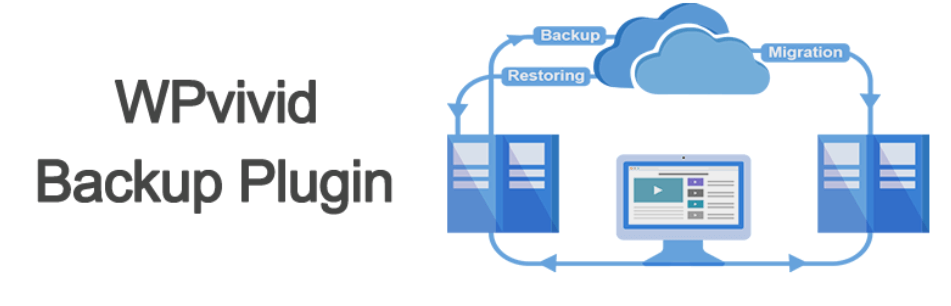
WPvivid Backup plugin
WPvivid Backup plugin is perfect for site migration, as well as for keeping a copy of your WordPress site on hand. It supports both automated migration and manual migration (uploading a backup to a destination site and then restoring it). What’s more, it’s completely free and has no restrictions on the website size you can migrate.
Migrate Your Site to Sino Soft
Our main goal at Sino Soft is to make your life easier. That’s why we here to help you if you’re your WordPress site to a new host (us).
If you’re ready to migrate your WordPress site to Sino Soft, all you have to do is choose a web hosting plan and let’s help you with the process!
Credit: WP Engine